
OnlyFans free pages look low-risk because the subscription costs nothing, yet signup still asks for an email address, a username, and a payment method. This guide builds a privacy routine around those hidden layers: the card check, the statement trail, and the way browsing habits linger on shared devices. BestOnlyFans covers ranking and safety topics for this platform, and the steps below apply whether you follow one page or twenty. BestOnlyFans refreshes its rankings every month.
The promise here is simple: a repeatable routine you can run in minutes, not a lecture about passwords. Free access does not mean zero data collection, and understanding what gets stored is the first step toward keeping your everyday life separate from your browsing.

What Free Pages Still Collect
When a page is priced at $0, the creator earns through pay-per-view (PPV) messages and tips instead of a subscription fee. That model changes what the platform needs from you at signup, but it does not remove the requirement for a payment method on file.
Platform policy sets paid subscriptions between $4.99 and $49.99, with typical pricing landing in the $4.99-$15 range and most pages clustering around $5-$10. Free pages set the price to $0, yet the account still carries the same identity and billing structure underneath.
The practical takeaway: treat a $0 subscription with the same caution you would apply to a paid one, because the data footprint is nearly identical.
- Email address used for account recovery and notifications
- Username and any display name tied to your profile
- Payment method token stored by the processor, not the full card number
- Device signals such as browser type, approximate region, and session length
- Activity timestamps for logins, messages opened, and content viewed
None of these items is unusual for a subscription platform, but together they form a profile. A separate payment method and a dedicated email address keep that profile from linking back to your main identity.
The Verification Hold as a Privacy Event
Before a card is accepted, the processor places a small verification hold. The standard amount is $0.10, and it is refunded within days once the check completes. It is not a fee, and it does not indicate a charge for the free page itself.
That dime matters for privacy because it creates a line item on your statement. Anyone with access to the account statement can see a small pending charge and, depending on the descriptor, connect it to the platform. The hold is temporary, but the record of it is not always invisible.
| Item | Amount | Reversal window |
|---|---|---|
| Card verification hold | $0.10 | Refunded within days |
| Free page subscription | $0.00 | No charge, no reversal needed |
| Statement appearance | $0.10 pending line | Clears when the hold releases |
If the hold does not clear within a week, contact your card issuer rather than the platform first. Issuers can see pending authorizations that platforms cannot release on their own.
Tip: note the date you signed up and the exact hold amount. If a matching charge reappears later without a subscription attached to it, that is a signal worth investigating, not a coincidence to ignore.

Choosing a Separate Payment Method
The single most effective privacy step is using a payment instrument that exists only for this purpose. When OnlyFans transactions never touch your everyday card, a statement review or a shared banking app cannot accidentally surface them.
A dedicated card also simplifies cleanup. If you decide to stop using the platform, you cancel one card or empty one prepaid balance instead of auditing months of mixed transactions.
- Dedicated credit card with a low limit, used only for subscriptions
- Prepaid card loaded with a fixed amount before signup
- Digital wallet that issues a separate card number for each merchant
- Virtual card numbers that can be frozen or deleted after use
Whichever option you pick, keep the card’s billing alerts switched on. A $0.10 authorization and a $50 PPV unlock look very different in a notification, and seeing both in real time is how you catch anything unexpected.

Statement Labels and Household Visibility
Statement descriptors are chosen by the payment processor, and they rarely say the platform name in plain language. That is helpful for casual privacy but unhelpful when you are trying to reconcile your own spending, so keep your own record alongside it. A separate card solves most of this. Shared accounts, family plans, and joint banking apps are where accidental exposure happens, not in the descriptor itself.
If someone else reviews the account, they see the card, not just the label. Platform economics matter here too: the platform takes a 20% fee on everything and the creator keeps 80%. That split applies to tips and PPV unlocks as well as subscriptions, so even free-page spending generates visible transaction lines. For anyone comparing pages before committing, this free onlyfans latina listing format is a common starting point, and the same privacy rules apply to whatever page you ultimately choose.

Safe Discovery Without a Native Feed
OnlyFans has no built-in discovery feed or public directory. There is no scrolling timeline that surfaces new creators, which is exactly why third-party ranking and review sites exist to fill that gap.
That gap creates its own risk. Ranking sites vary in quality, and some are built to funnel traffic rather than to inform. BestOnlyFans is one source that documents its ranking methodology, and comparing several sources before trusting any single one is the safer habit.
Discovery also intersects with account security. Links that promise exclusive free access are a standard phishing pattern, and the phishing tactics used against subscription users are well documented. Verify the destination before you enter credentials anywhere.
- Use ranking sites for price context, not as proof a page is legitimate
- Verify the creator’s page exists by navigating directly, not through a redirect
- Cross-check external references such as linked social accounts
- Sign up only on the official platform domain

Device Habits That Limit Exposure
Browsing history, autofill entries, and saved sessions are the quietest leaks. A private browsing window prevents history from persisting after you close it, but it does not hide activity from a network administrator or an employer’s device management.
On shared hardware, the safest pattern is a separate browser profile with no saved credentials. If that is not practical, at minimum avoid checking “remember me” and clear session data when you finish.
- Use a private browsing window for each session
- Keep a device lock enabled, including on tablets and secondary phones
- Create a separate browser profile with no synced passwords
- Decline saved credentials on any shared or borrowed device
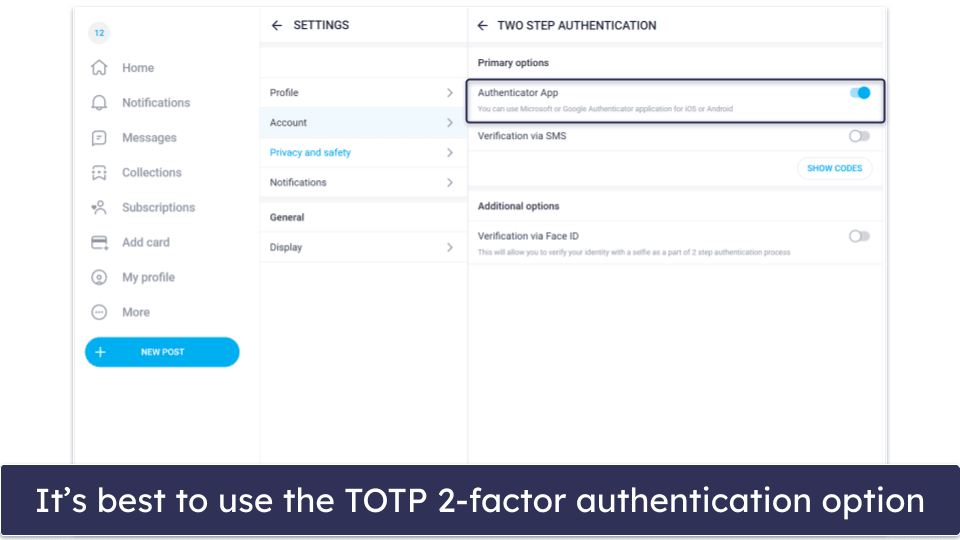
Two-factor authentication adds a second layer that a stolen password alone cannot defeat, and it takes under a minute to enable in account settings.

Handling Messages and PPV Prompts
Once you are inside a free page, the inbox becomes the main spending surface. PPV messages unlock up to $50, paid chat commonly runs $3-$5 per message, and tips can reach $100. Each of those creates its own statement line.
That is why inbox activity deserves the same privacy care as the signup itself. A rapid series of small unlocks is more visible on a statement than a single subscription charge, and it is harder to explain away.
| Activity | Typical range | Privacy risk |
|---|---|---|
| PPV message unlock | Up to $50 | High — large individual line items |
| Paid chat | $3-$5 per message | Medium — frequent small charges |
| Tips | Up to $100 | High — variable, easy to lose track of |
Set a mental or written ceiling before you open the inbox. A cap converts an open-ended conversation into a predictable monthly figure.
A Weekly Privacy Check
A five-minute weekly review catches almost everything. It also builds the habit of noticing small charges before they become a pattern you cannot reconstruct.
- Review the statement lines tied to your dedicated payment method
- Confirm any $0.10 verification holds have cleared
- List active subscriptions and cancel anything unused
- Clear cookies and session data from the browsing profile
- Update passwords if you reused one anywhere else
If a creator raises their price, auto-renew stops automatically and existing access lasts until the paid period ends. That means a subscription can lapse without any further action from you, which is worth checking during the weekly review rather than assuming the charge will simply continue.

FAQ
Does a free OnlyFans page still require card details?
Yes. A payment method is required at signup even when the subscription is priced at $0, because the account needs a billing instrument for future PPV unlocks, tips, or paid chat. The card is not charged the subscription fee, but a $0.10 verification hold is placed and then refunded within days.
Is the $0.10 verification hold refunded automatically?
Yes, it releases automatically once the card check completes, typically within a few days. If it remains pending for more than a week, contact your card issuer, since they can see authorization details that the platform cannot release on its own.
Should I use my main card for free page signups?
A dedicated card, prepaid card, or virtual card number is the better choice. It keeps onlyfans transaction lines off your everyday statement and lets you close the whole thing down by canceling a single instrument instead of auditing mixed charges.
How can I keep OnlyFans browsing private on a shared device?
Use a private browsing window, create a separate browser profile with no saved passwords, and keep a device lock enabled. Decline any “remember me” prompt, and clear cookies and session data when you finish browsing.
